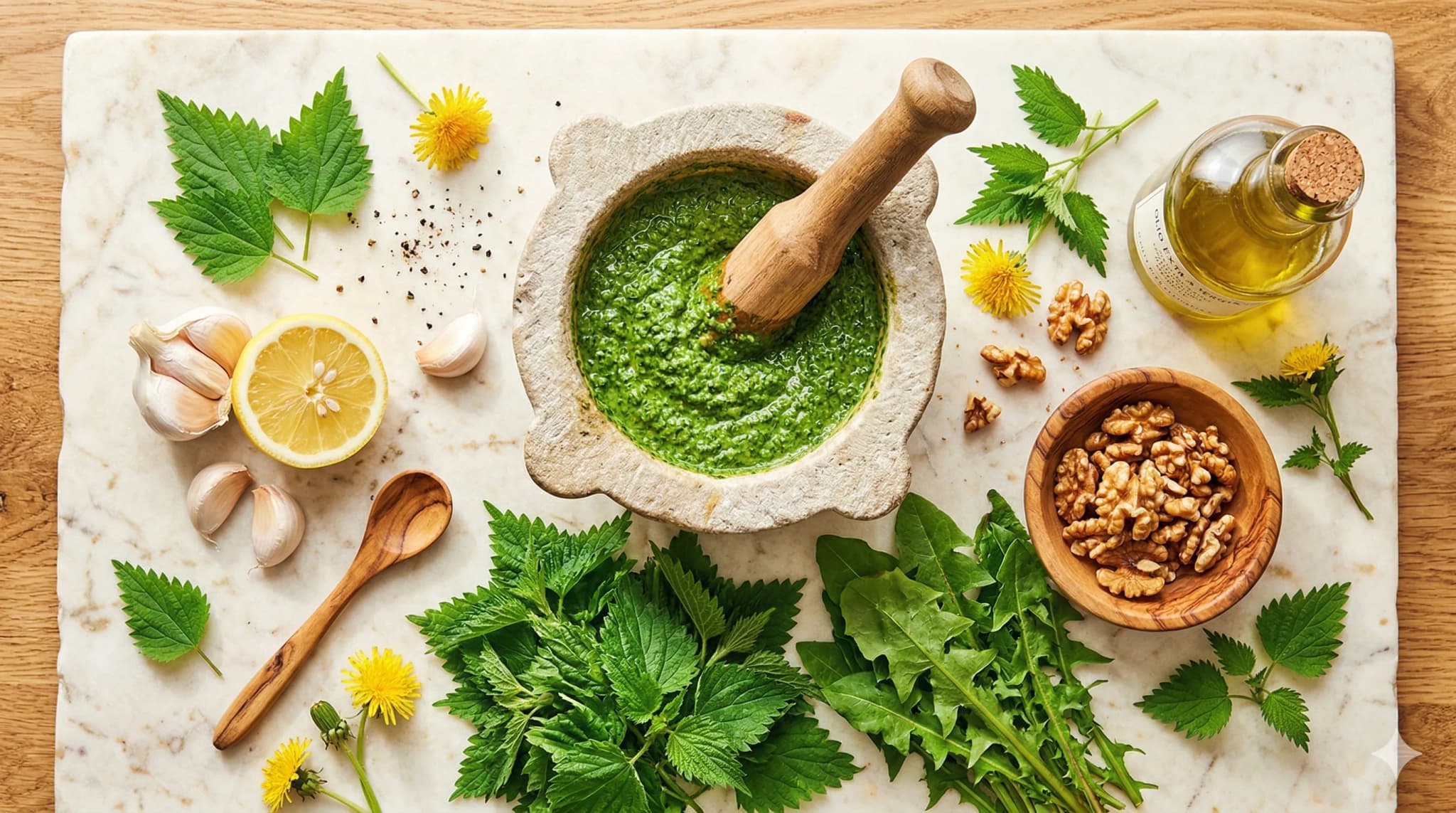
In Chinese medicine, spring is the season of the Liver and the Wood element — a time when the body craves bitter, sour, and green. Nettles and dandelion greens are two of the most important spring tonics in both Western herbalism and TCM. They support the liver's natural detoxification processes, provide dense mineral nutrition (iron, calcium, magnesium), and taste like the season itself — bright, green, and alive.
ingredients
- 2 cups fresh nettle leaves (blanched and squeezed dry)
- 1 cup dandelion greens, roughly chopped
- 1/2 cup toasted walnuts (or pine nuts)
- 2 cloves garlic
- 1/2 cup extra virgin olive oil
- 1/4 cup grated Parmesan (or nutritional yeast for vegan)
- 1 tablespoon lemon juice
- 1/2 teaspoon sea salt
- 1 tablespoon Human Nature Rise Spring Oxymel (optional)
directions
- 1.Wearing gloves, blanch the nettles in boiling water for 60 seconds. Transfer immediately to an ice bath. Squeeze dry thoroughly — excess water makes watery pesto.
- 2.Add blanched nettles, dandelion greens, walnuts, and garlic to a food processor. Pulse until roughly chopped.
- 3.With the processor running, drizzle in olive oil until you reach your desired consistency.
- 4.Add Parmesan, lemon juice, salt, and oxymel (if using). Pulse to combine. Taste and adjust seasoning.
- 5.Serve over pasta, spread on sourdough, or spoon over roasted spring vegetables. Stores in the refrigerator for up to 5 days — press plastic wrap directly onto the surface to prevent browning.
notes
This pesto is a practical way to eat your spring medicine. The optional tablespoon of Rise oxymel adds a tangy, complex note and bridges the gap between food and herbal practice.
Foraging note: harvest nettles before they flower, wearing thick gloves. Blanching completely deactivates the sting. Dandelion greens are best harvested young, before the plant flowers — older leaves are more bitter.